The Trouble with Murky Kombucha
I do not make kombucha. I will not make it, and I will not offer it to anyone. Because it drives me up the wall. Kombucha embodies a contradiction. The more faithfully it is made, the more vinegary and alcoholic it becomes. The more pleasant it is to drink, the less kombucha there is in it.

I do not make kombucha.
I will not make it, and I will not offer it to anyone.
Because it drives me up the wall. Kombucha embodies an inherent contradiction. The more faithfully it is made, the more vinegary and alcoholic it becomes. The gentler and more pleasant it is to drink, the less kombucha there is in it.
And while the biology and production technology of kombucha are reasonably well understood and fairly transparent, everything else around it is murky at best.
The “Mushroom” Is Not a Mushroom
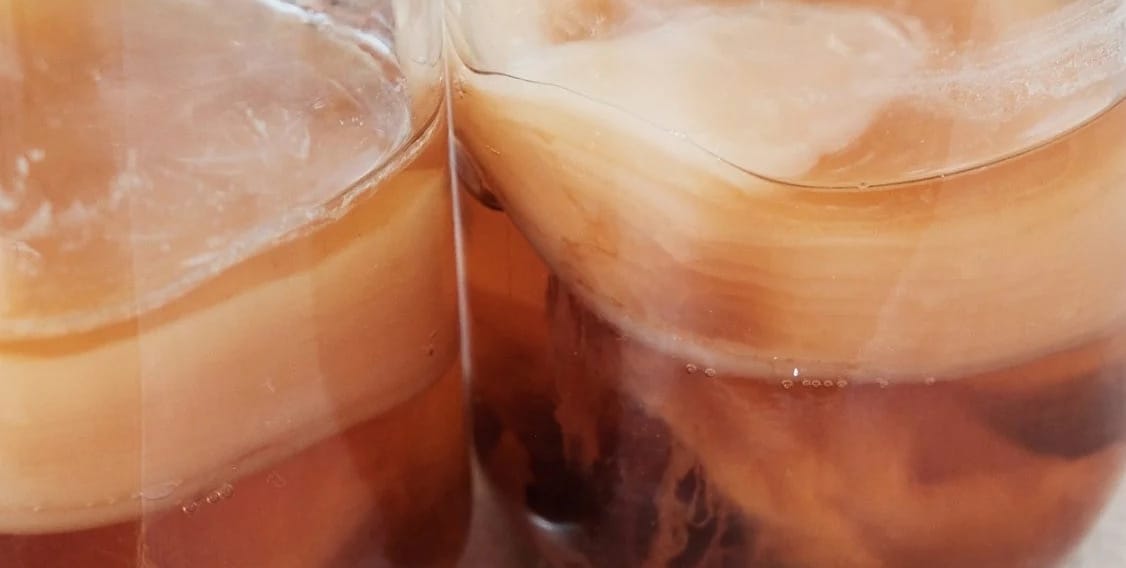
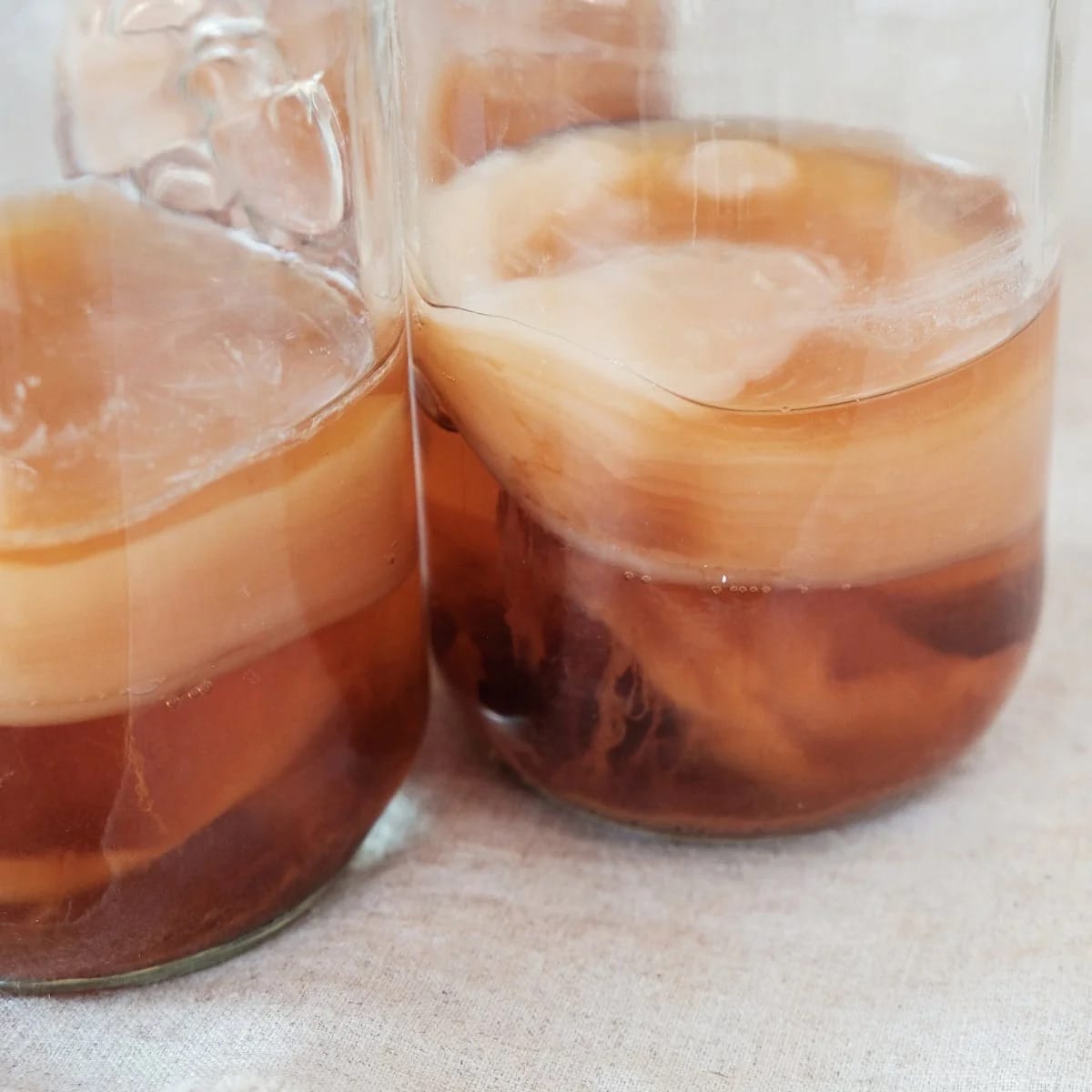
The “mushroom” or “mother,” also known as a SCOBY—is, of course, not a mushroom at all. It is a Symbiotic Culture of Bacteria and Yeast.
The bacteria—primarily acetic acid species of the genera Acetobacter, Gluconobacter, and Komagataeibacter—produce a zoogloeal mat, a dense, rubbery film of bacterial cellulose on the liquid’s surface.
The pellicle itself is a habitat, not the active fermentation zone. Most of the microorganisms live in the liquid, so the “mushroom” itself is technically unnecessary. To start a new batch, 10–20% of liquid from the previous batch is sufficient. A new pellicle will form on its own.
The fermentation of sweet tea proceeds in two stages. Broadly speaking, yeast—primarily Zygosaccharomyces, Brettanomyces, and Saccharomyces—first ferment sucrose into ethanol and carbon dioxide. Acetic acid bacteria then convert that ethanol into—unsurprisingly—acetic acid, as is their nature.
Young kombucha is sweet and somewhat dull. Overripe kombucha is sharply acidic. The window where it becomes genuinely interesting is narrow and hard to catch. In the brief overlap when both stages occur simultaneously, somewhat interesting flavor nuances appear. Esters and aldehydes on the nose, acidity, and residual sweetness in balance.
No Way Around the Booze
Alcohol in kombucha is a necessary intermediate product. Without ethanol, acetic acid bacteria have nothing to feed on.
In prolonged aerobic fermentation, all alcohol could theoretically be converted into acetic acid, but in practice this does not happen. The bacteria become inhibited at low pH, while the yeast continue producing fresh ethanol for as long as sugar remains in the system. Finished live kombucha normally contains alcohol—often in the 0.5–3% range, and sometimes more.
Industrial producers solve the alcohol issue in several ways, but the most reliable method of precisely controlling alcohol in a nominally non-alcoholic beverage is to remove it from the finished kombucha, as is done with beer or wine, through membrane filtration or distillation.
Or You Can Simply Stop Early
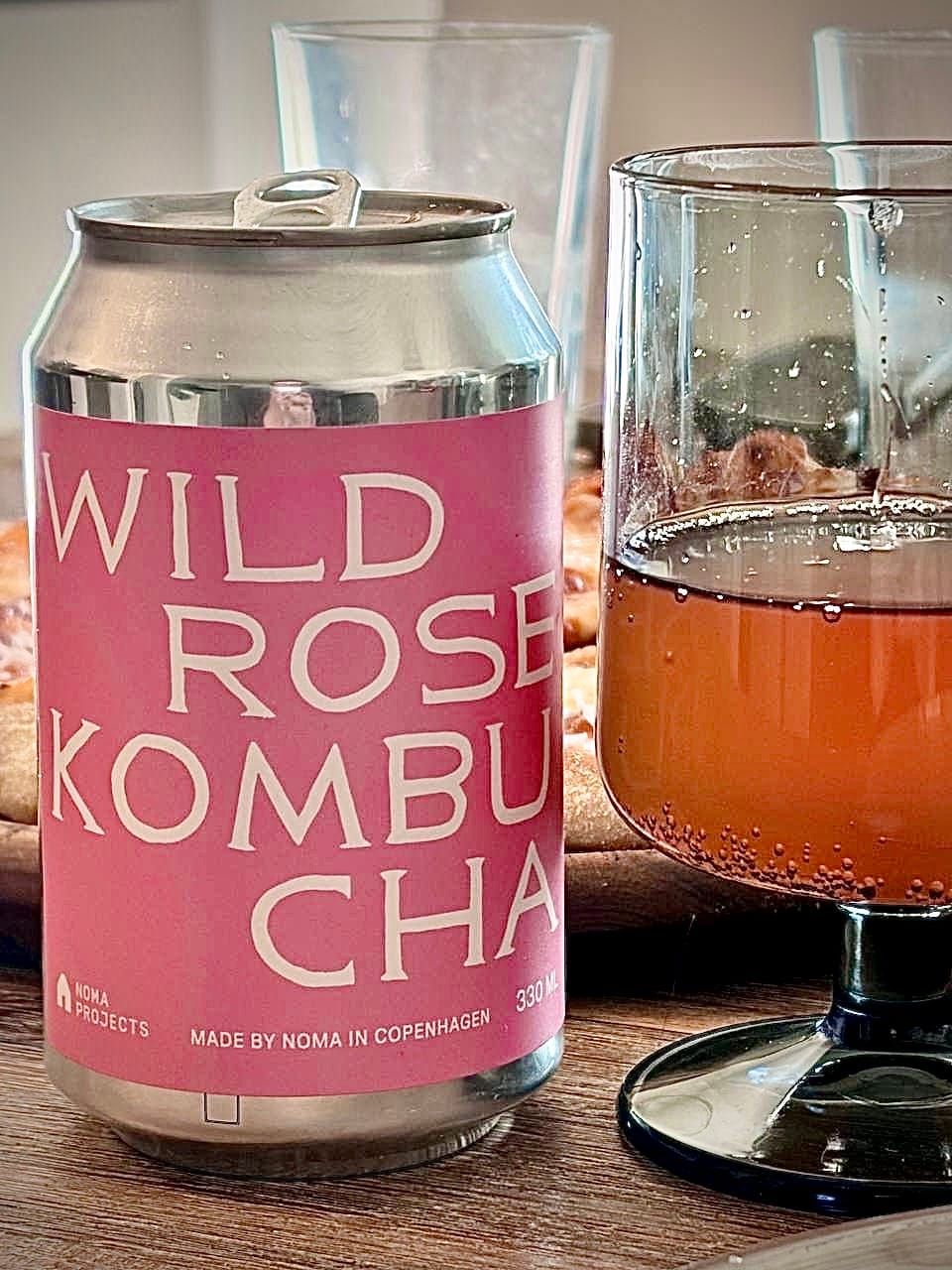
Many producers simply under-ferment it. The drink is taken off early—sweet, soda-like, exactly what the mass consumer expects. Cooling and filtration slow the process and remove part of the living culture. Pasteurization stops fermentation altogether. The base is then often diluted with juice or flavored water until it reaches a commercially acceptable taste.
As a result, most bottles on the shelf are not a “live” fermented product but a kombucha-based beverage: stabilized and adjusted. In that form, kombucha is largely stripped of its two defining traits, vinegary acidity and alcohol content.
At that point, it is hardly kombucha at all.
Benefits With No Benefit
Claims that kombucha meaningfully improves health are fanciful. Kombucha microorganisms are not classified as probiotics: its yeasts and acetic acid bacteria do not meet probiotic criteria either taxonomically or clinically. Most studies have been conducted in vitro or on animals, and robust human trials free of conflicts of interest are nearly nonexistent.
Pasteurized supermarket kombucha contains no live cultures at all, so discussing microbiome benefits in that context is simply meaningless.
None of this means kombucha is harmful. It simply means that its image as a functional beverage is a marketing construct well suited to selling bottles.
I consider it unacceptable to promise people better health through food. I have no interest in exploiting people’s health anxieties or their desire for simple solutions in a nicely labeled bottle. That is speculation.
Murk All the Way Down
Characteristically, the haze surrounding kombucha begins with its very origins. One quick search will immediately serve you the story of northeastern China and two thousand years of tradition. But there is no reliable written evidence for any of it, and the legend of Emperor Qin Shi Huang’s so-called “tea of immortality” is an unsourced fairy tale.
The documented history of tea fungus in Europe begins much later, in the early twentieth century—most likely in the Russian Empire and neighboring Eastern European regions. It appears the culture reached Central Europe with soldiers, doctors, and prisoners of war during the First World War.

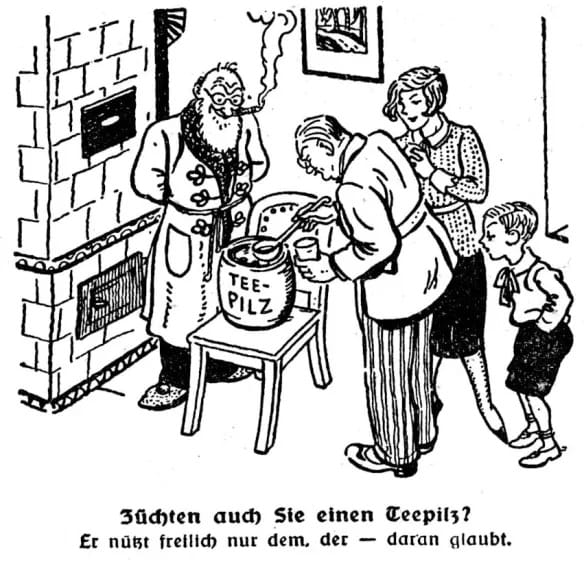
In the German-speaking world of the 1920s, the drink was known as Teepilz (tea mushroom), as well as Japanese, Indian, or Chinese mushroom; Wolgaqualle (Volga jellyfish); russischer Schwamm (Russian sponge); and a dozen similar names. There was no single accepted name—people did not really understand what the thing was.
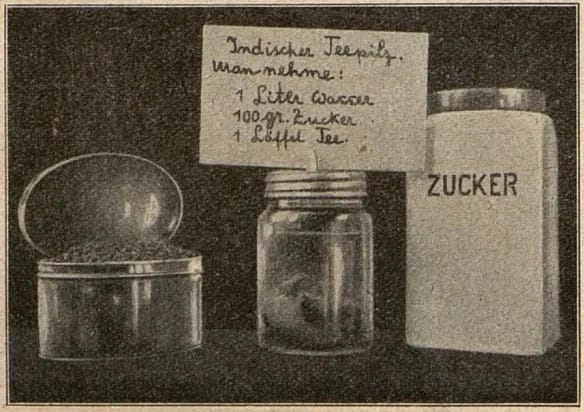
Sorry, Japan
The word “kombucha” is not, in fact, the historical name of this beverage. According to food historian Uwe Spiekermann, the term Kombucha emerged only in the mid-1920s in Prague as a commercial label resulting from confusion between tea fungus and Japanese kombu-cha—a beverage made from kombu seaweed, which has nothing whatsoever to do with fermented tea. Japanese physicians in Europe at the time, incidentally, had never heard of any “tea fungus” by that name.
The word was rendered in several different ways before the modern spelling eventually stuck. Incidentally, in German it is pronounced rather amusingly—kombukha—for better or worse.
In other words, even kombucha’s very name is the result of a mistake.
A Whole Song and Dance
By the 1920s, kombucha in Europe was marketed not merely as a beverage but as a miracle cure. It was advertised as a universal health tonic, promising improved digestion, rejuvenation, detoxification, and heaven knows what else. In other words, much as it is today.
Though at the time, what was sold was less the drink itself than the pellicle. Pharmacists complained that once a customer bought one, they never returned.

By the 1950s, thousands of Italian families kept jars of jellyfish-like mass in sweet tea at home and drank a glass every morning—convinced it was a panacea for all disease. Newspapers ran front-page stories about the mushroom.
Even Renato Carosone, the celebrated singer-songwriter and performer, did not ignore kombucha. In 1955, Renato Carosone released the song Stu fungo cinese—“This Chinese Mushroom”. “Don’t take penicillin, don’t take streptomycin—drink the mushroom every morning!” The song was ironic enough, but the fad itself was entirely serious.
Unwellness
But “kombucha” only truly entered mass circulation in 1995, when American entrepreneur GT Dave put it on store shelves and launched an industry now worth billions of dollars. The marketing engine behind the first—and still largest—company in this peculiar market was the story of his mother’s recovery from breast cancer allegedly thanks to homemade kombucha. Which had entered their household through friends of friends, who had, naturally, received the culture from a Buddhist monk.
GT Dave was eventually forced to remove health claims from the label after making false health-related claims. Which I agree with, because any benefits it may offer are negligible at best.
Drinking Vinegar Is So Medieval
Kombucha is not for me. I pick up acetic acid immediately, even in under-fermented kombucha. Its rather unpleasant aroma cuts through any flavoring. I use vinegar extensively in the kitchen, but I cannot drink it carbonated.
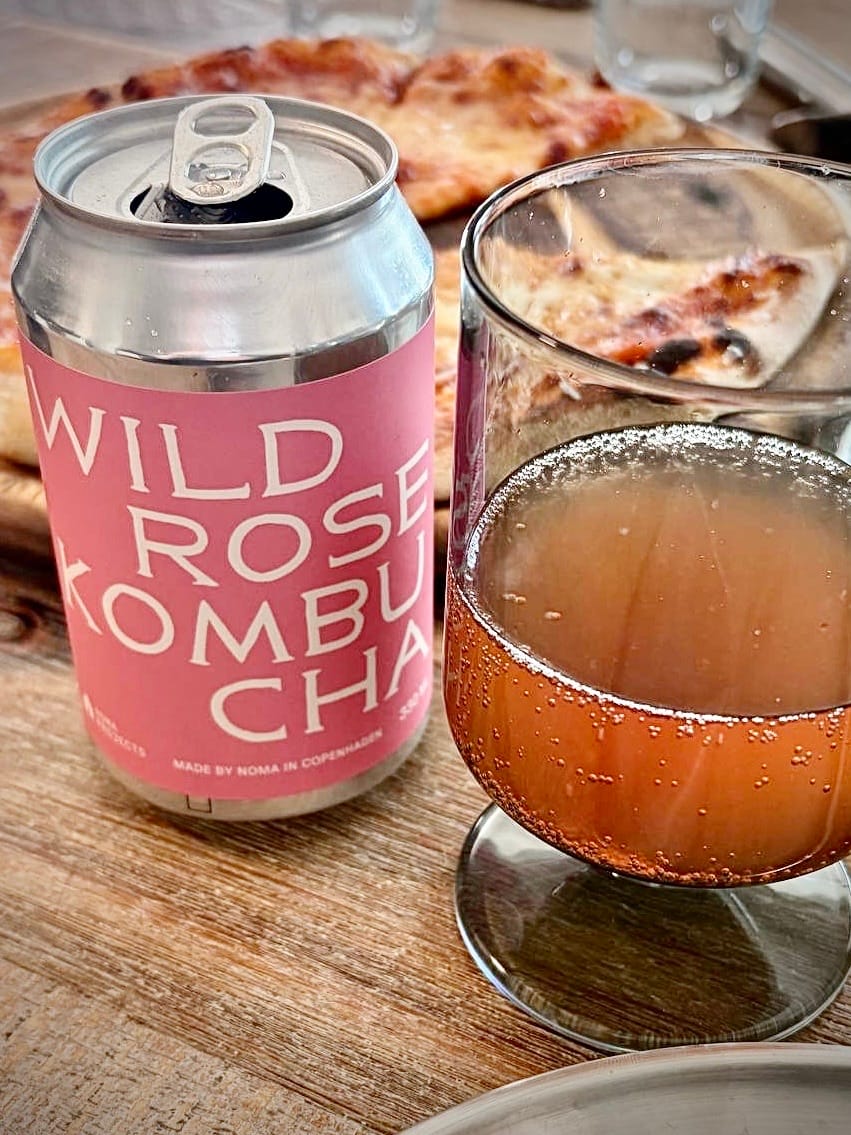
The vinegary note in kombucha is not a production flaw—it is its identity, the result of its core biochemical process, and it cannot be removed entirely. It can be muted, but not eliminated.
In earlier times, when people knew nothing of bacteria or how to coexist with them, those without access to proper wine were forced to drink sweetened vinegar mixed with potash and spices. Back then, perhaps there was no choice. But what about today?
Lacto-Fermented Drinks Are the Bright Future
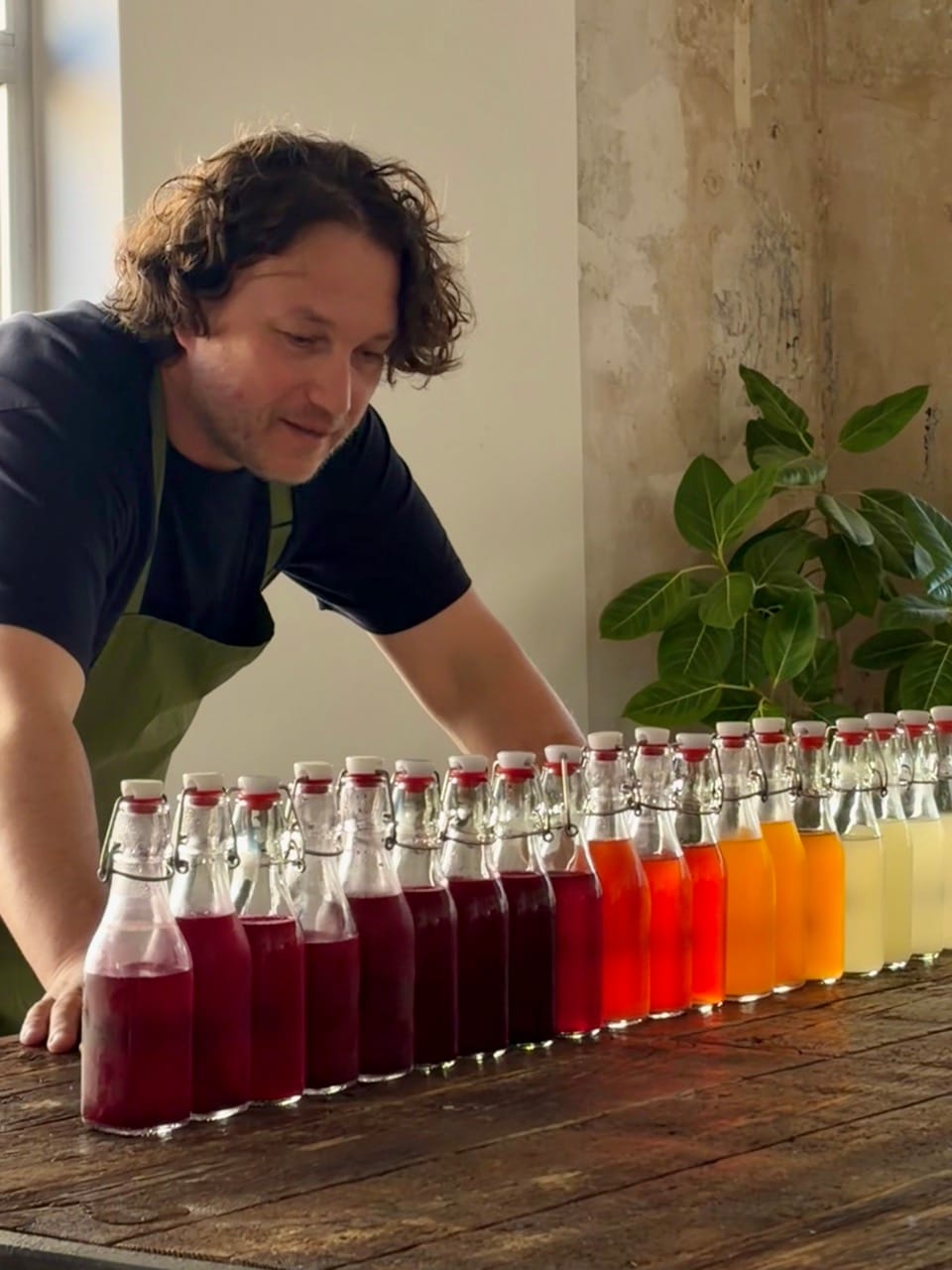
Lactic acid, by contrast, is another matter entirely. It is soft, non-volatile, and lends a pleasant body to a drink. That is the acid we produce in our fermentation lab.
That Is Why I Do Not Make Kombucha
I dislike products surrounded by mythology, half-truths, fanatical enthusiasm from poorly informed people, and smelling of vinegar.